

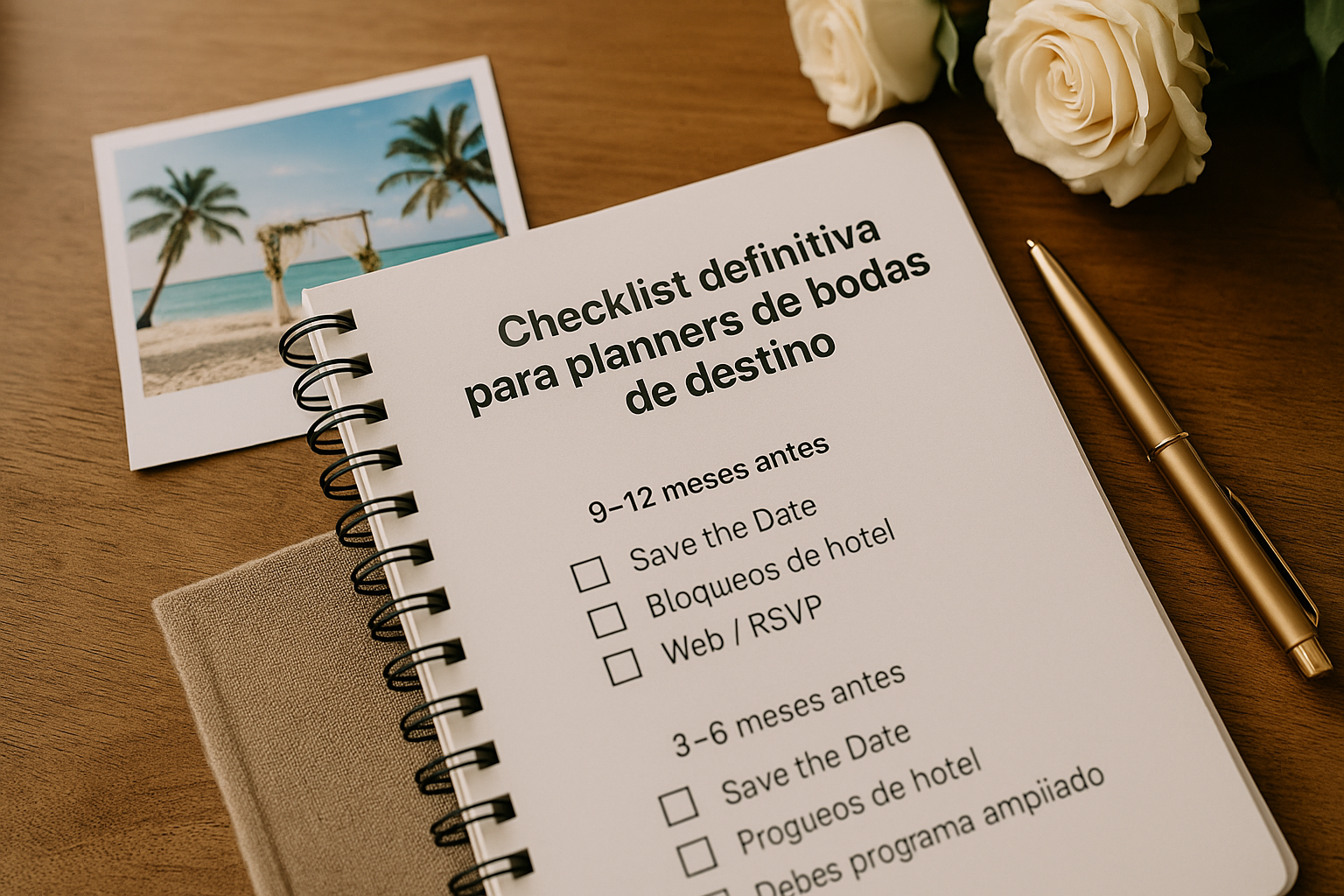
The ultimate checklist for destination wedding planners
Planning a destination wedding means coordinating logistics, regulations, international suppliers and the expectations of couples and guests. This checklist, based on well-established industry practices, helps you organise every stage without losing your way.
12+ months before: a clear vision and a realistic budget
- Define the style and atmosphere with an inspiration board (colours, florals, look & feel, protocol).
- Set the overall budget and include a 10–15% margin for contingencies.
- Shortlist destinations based on climate, accessibility, language and legal requirements.
- Map out a master timeline with milestones and owners (ideally in Hubents, organised by stage).
9–12 months before: informed guests and secured accommodation
- Send the Save the Date well in advance to make booking time off and flights easier.
- Block hotel room allocations and share rates or codes with guests.
- Create the event page with key information and an integrated RSVP.
- Define the logistics for transfers and meeting points.
6–9 months before: key suppliers and additional events
- Confirm your main suppliers: venue, catering, photo/video, music, florist, transport.
- Schedule trials (menu, hair/make-up, sound) or request references and a tasting kit.
- Design the extended programme: welcome dinner, rehearsal, farewell brunch.
- Prepare draft contracts and weather/plan B clauses.
3–6 months before: paperwork, documentation and technical detail
- Verify the legal documentation for the destination (licences, translations, apostilles).
- Check passports and visas (a minimum recommended validity of 6 months, if applicable).
- Collect guests’ diets, allergies and restrictions (a form connected to the seating plan).
- Define the space layout, lighting scheme and technical rider.
2–4 weeks before: confirmations and contingency plans
- Confirm timings, deliveries and set-ups with each supplier.
- Send out running orders by role (couple, suppliers, team).
- Arrange or review insurance (travel, public liability, weather) and cancellation terms.
- Finalise payments, deposits and guarantees.
1 week before: preparation and handover
- Prepare an emergency kit and signage/branding materials.
- Confirm passenger lists, transfer schedules and rooms.
- Review daily checklists by area (venue, catering, decor, technical, hospitality).
- Hold a final meeting with the team to validate scenarios A/B.
On the day of the event: a calm execution
- Walk through the spaces and carry out set-up control by milestones.
- Hand out welcome packs and useful information to guests.
- A command point with a visible timeline, radios/messaging and owners for each block.
- Document incidents and resolutions for the post-event debrief.
Key extras for destination weddings
- A local supplier as your ally: they know the regulations, culture and timings of the place.
- A weather plan: realistic alternatives for rain, wind or heatwaves.
- Hospitality: a help desk for flights, luggage, emergencies and recommendations.
- Sustainability: waste management, local/seasonal flowers and shared transport.
Quick summary (timeline)
| Stage | Key actions |
|---|---|
| 12+ months | Style, budget, destinations and master timeline |
| 9–12 months | Save the Date, hotel blocks, website/RSVP |
| 6–9 months | Key suppliers, trials and extended programme |
| 3–6 months | Legal documentation, guests, seating plan |
| 2–4 weeks | Confirmations, running orders, insurance and payments |
| 1 week | Kits, transfers, checklists and final meeting |
| Day of the event | Walkthrough, welcome packs, timeline control and debrief |
How to put it into practice in Hubents
- Tasks by stage: venue, catering, photography, music, decoration, guests.
- Smart forms: guest data connected to the seating plan.
- Timeline and tasks: owners, deadlines and automatic reminders.
- Documents and contracts: templates, versions and centralised signing for each event.
- Couple view: budget, RSVP, to-do list and progress without overwhelming the planner.